

Troops from a Spanish warship stormed a pirate skiff in the Gulf of Aden Saturday and rescued a French hostage missing from her yacht but found no trace of her husband, the EU anti-piracy mission said. As a helicopter kept watch overhead, naval commandos in a fast launch fired on the skiff to disable its engine. The boat sank, but the hostage was rescued and seven pirates were arrested unharmed, the Spanish defence ministry said. "She was the only hostage on board the skiff. Her husband was not on board," EU naval spokesman Captain Paul Gelly told AFP, confirming the rescued hostage was Evelyne Colombo, wife and crewmate of missing sailor Christian Colombo. "She is safe and sound," he said, explaining that Colombo and the detained pirates are now on board the Spanish ship. A German warship, the FGS Bayern, found the couple's catamaran the Tribal Kat, adrift in waters off Yemen on Thursday. There was no-one on board and the EU Atalanta naval command launched an air and sea search for the attackers. French officials said there were signs of a struggle on board the yacht, which was towed to Djibouti to be studied by agents from the DGSE spy agency. "It was like searching for a needle in a haystack," Gelly said. "Our priority was to search for any vessel that might have been leaving the area and heading for the coast of Somalia." The French frigate Surcouf detected a suspect vessel and on Saturday the Spanish warship SPS Galicia chased it down. The Spanish defence ministry said when the skiff ignored an order to stop, the commander of the Galicia ordered his men to open fire. "At that time, it was discovered that they had a hostage on board, who was a woman," it said. "The amphibious ship proceeded to intercept the pirate vessel. The operation involved a helicopter and naval warfare team, who fired on the engine of the boat, to disable it." Christian Colombo is a former French navy crewman and the couple were experienced sailors who wanted to see the world and were passing through the Gulf of Aden en route for the Indian Ocean and eventually Thailand. "They knew they were taking a risk and everyone advised them not to go," a relative told AFP. One of the couple's daughters, Emilie, posted a message of concern on the blog they were keeping of their high seas adventure. "The last I heard from Christian was around a month ago. He was south of Egypt and heading for Malaysia," said the skipper's friend Gerard Navarin, who once helped him set a catamaran speed record off Toulon. The waters between Yemen and Somalia are notorious for attacks by pirate gangs, and French yachts have been among the vessels seized in the past. A second yacht went missing at around the same time as the Tribal Kat. Somali pirates frequently seize crew from merchant ships and pleasure craft in the dangerous waters off the conflict-ravaged Horn of Africa and have taken millions of dollars in ransom for their release. According to the watchdog Ecoterra, at least 50 vessels and at least 528 hostages are being held by Somali pirates, despite constant patrols by warships from several world powers. A French couple was kidnapped from a yacht in September 2008 as it headed through the Gulf of Aden. A ransom was paid, but French commandos later ambushed the pirates, killed one, captured six more and recovered the cash. In April 2009, another French yacht was seized. This time special forces troops intervened when the boat was still at sea. In the ensuing gunbattle a French bullet accidentally killed the hostage skipper. In addition, a French DGSE agent is thought to have been held hostage by Islamist militants in the Somali capital since July 2009


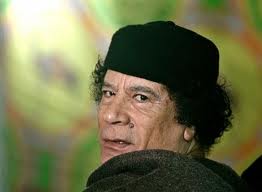 In another confusing round of claims and counterclaims by the Libyan rebels, a spokesman for their most powerful militia commander said Wednesday that rebel forces had cornered Libya’s fugitive leader, Col. Muammar Qaddafi, a report dismissed by a spokesman for the transitional government’s military. The claim came as rebel officials as well as officials in neighboring Niger said Colonel Qaddafi had not fled into Niger, nor had two of his most powerful sons, contrary to speculation after news reports said 200 armed vehicles or more headed into the country recently. On Tuesday, officials within Niger and some independent witnesses said that there was no such convoy, while confirming that some smaller number of Libyan vehicles had entered in recent days, and the State Department said that at least a dozen senior members of the Qaddafi government had fled to Niger. On Wednesday, Mohamed Bazoum, Nigerien foreign minister, told French Radio: “There’s no question that some people arrived. But it wasn’t at all of the order of magnitude that people have said. Two hundred vehicles, that’s inconceivable. Ten cars, maximum.” The Associated Press quoted a spokesman for Niger’s president as saying that one was Colonel Qaddafi’s security chief, Mansour Dao. The Wednesday claim that the fugitive leader was cornered came from Anis Sharif, the spokesman for Abdel Hakim Belhaj, who is the chairman of the Tripoli Military Committee and the leader of one of the biggest rebel militias. Mr. Sharif said a variety of rebel units had converged on an area in the desert where they had confirmed the presence of the leader. “We are waiting for the right moment to move in and in the meantime we are tracking his movements,” Mr. Sharif said. “He doesn’t have a very strong protection with him, not as much protection as we had expected. He only moves at night to avoid NATO air strikes.” Mr. Sharif declined to say where the location was, other than in the Sahara desert, which occupies more than half of the southern part of the country. He said that the rebel forces had advanced to within 40 miles of his location and had surrounded the area. “He cannot escape,” he said, adding he expected rebels to move in soon. “It’s up to the leaders on the ground who will make their move when it’s time.” Abdulrahman Busin, the military press liaison, said that the reports of Colonel Qaddafi being surrounded were rumors, and that there were also unconfirmed reports that he was in yet another convoy moving toward the remote Niger border. Niger also borders Burkina Faso, another landlocked Saharan country, which had previously announced that it would grant asylum to Colonel Qaddafi. On Tuesday however, according to the Associated Press, Burkina Faso officials said he would be arrested if he arrived there.
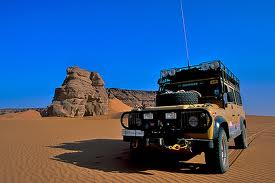 Neither Gaddafi nor any of his sons were on the convoy that arrived in Niger from Libya. The statement was made by Niger Foreign Minister, Mohammed Bazoum, on the microphones of Al Arabiya.& 13; The news was leaked by sources of the National Transational Council, according to which the 200-250 vehicle convoy that crossed the Fezzan desert to reach the ciy of Agadez, escorted by local security forces, carried an enormous load of gold and cash as well as several members of Gaddafi's family. "None of this is true", Bazoum said, cutting short, "it isn't Gaddafi and nor do I think that the convoy was as large as reported". In his opinion, the convoy carried former officials of Gaddafi's regime, although of intermediate ranking: this therefore also appears to deny the presence on the convoy of Mansour Daw, the chief of the Colonel's security forces. & 13; Also France, the former colonial power of the sub-Saharan Country, denied rumors concerning Gaddafi: "We have no information enabling us to think that Colonel Gaddafi is on that convoy", reiterated a spokesperson of the Elysee
 British intelligence and Scotland Yard were involved in an international operation to protect Saif al-Islam, the son of Muammar Gaddafi, from an Islamist plot to assassinate him on British soil, secret files discovered by The Independent have revealed. The British intelligence services suspected that the plot was linked to Qatar, currently the West's foremost Arab ally against the Libyan regime. MI6 and the SAS are now involved in the hunt for Saif, along with other members of the Gaddafi family who remain elusive in the endgame of the Libyan civil war. The dictator's son has been condemned by the Prime Minister, David Cameron, and Nicolas Sarkozy, the French President, for his part in the brutal crackdown which followed the February revolution and for which he faces war-crimes charges. But, in the past, MI6 urgently contacted its French counterparts after Libyan authorities reported that a terrorist cell linked to the Gulf state of Qatar was planning the attack from Paris. The French told UK officials at the time that "the Qatari Interior Minister was known to be an Islamist extremist sympathiser".