24 Aug 2011

William Hague has asked rebel forces to help end the siege at the Rixos Hotel,

The hostages have been barred from leaving the building by gunmen brandishing AK-47s who have vowed to defend their country against rebels.
Food and water are running out, gunmen are "roaming the corridors" and snipers have been posted on the roof. Electrical power has also died in parts of the hotel.
Those inside include journalists from the BBC and ITN, as well as an Indian member of parliament and the former US congressman Walter Fauntroy.
Speaking after a meeting of the National Security Council, the Foreign Secretary said he was monitoring the situation "hour by hour".
"We're monitoring that closely. We are in touch with their news organisations. We are concerned about their safety," Mr Hague said.


Abdelbaset al-Megrahi, the only man convicted of the Lockerbie bombing, should be sent back to the UK

Abdelbaset al-Megrahi, the only man convicted of the Lockerbie bombing, should be sent back to the UK, a Conservative MP has urged.

Robert Halfon said Megrahi should be reimprisoned, preferably in Scotland.

He was speaking after forces opposed to the rule of Col Muammar Gaddafi took control of most of Libya's capital.

Megrahi was released on compassionate grounds by the Scottish government in 2009, a move criticised by David Cameron, at the time opposition leader.

Megrahi was given a hero's welcome by the Libyan authorities when he returned in 2009 - a spectacle condemned by MPs at the time.

The Libyan was diagnosed with terminal cancer more than two years ago.

'Back in prison'
But he appeared at a rally broadcast by Libyan state television last month.

Mr Halfon said it had been a mistake for Megrahi to be sent back to Libya and that, amid the apparent collapse of the Gaddafi regime, this decision should be reversed.

I would like to see al-Megrahi back in jail”

Nick Clegg
Deputy Prime Minister
Libya regime 'falling apart' - PM
"He should be secured and, if possible, returned," he told the BBC.

"He should definitely be back in prison. If he doesn't come back he should be imprisoned over there."

The Scottish government recently defended its decision to return Megrahi to the Libyan authorities on the second anniversary of his release.

First Minister Alex Salmond said he stood by the decision, which had been made "in good faith and in the interests of Scots justice" - adding that it was based on the best medical advice at the time.

Megrahi was jailed 10 years ago for the Lockerbie bombing which claimed 270 lives in 1988.

The Foreign Office said Megrahi had been convicted in a Scottish court under Scottish law.

Legal issues
A spokesman said he could potentially be returned under the terms of his release, but this was a matter for the "relevant authorities" and was not something the UK government could interfere with.

Following a speech in London about the Arab Spring uprisings, Deputy Prime Minister Nick Clegg was asked whether, in the event that Gaddafi was ultimately removed from power, the UK would ask Libya's new leaders to return Megrahi to the UK.

Mr Clegg said there were "serious legal complexities" surrounding any such request which would have to be looked at.

But he added: "I would like to see al-Megrahi back in jail behind bars. That's where he belongs.

"My view is that he should never have been released by the Scottish administration in the first place."


The UN Human Rights Council on Tuesday ordered an independent investigation into the human rights situation in the unrest-torn country.


According to a resolution adopted by a large majority of votes, the council would task an independent international commission of inquiry in investigate alleged human rights violations in Syria since March this year, including possible crimes against humanity.

Chaired by the Ambassador of Uruguay, Laura Dupuy Lasserre, the council strongly condemned "the continued grave and systematic human rights violations by the Syrian authorities, such as arbitrary executions, excessive use of force and the killing and persecution of protesters and human rights defenders, arbitrary detention, enforced disappearances, torture and ill-treatment of detainees, also of children."

Just before the vote, Syrian Ambassador to the United Nations in Geneva Faysal Khabbaz Hamoui criticized the resolution for being 100 percent political and not balanced.

Monday, during the first part of the 17th Session, Syria has been widely condemned for the bloody repression of protests against President Bashar al Assad regime.

According to High Commissioner for Human Rights Navi Pillay, "over 2,200 people have been killed since mass protests began in mid-March, with more than 350 people reportedly killed across Syria since the beginning of Ramadan."

The high commissioner urged the UN Security Council to consider referring the situation in Syria to the International Criminal Court.

This is the second UN Human Rights Council Special Session held on Syria issues this year. The first was convened on April 29.

The council will hold its next regular session from September 12 to 30.

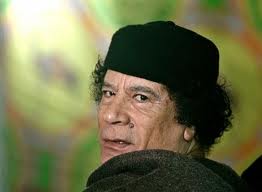
Gaddafi: a vicious, sinister despot driven out on tidal wave of hatred

Muammar Gaddafi, who seized power in Libya in a 1969 coup and whose Tripoli stronghold has been violently seized , was a leader with many guises. He was a Bedouin tribesman, a colonel and a self-styled revolutionary. He was an Arab and an African, a nationalist and a socialist, a Muslim, a poet and a would-be "philosopher king".

For the Libyan "masses", he was, in his own words, their Brother Leader, Supreme Guide, mentor, patriarch and uncle. But for his domestic opponents and for much of the western world, Gaddafi was something else entirely: a hubristic oil sheikh, a buffoon, a braggart, and a heartless killer.

With his overthrow as Libya's paramount chief, the international stage has lost one of its most colourful and disturbing personalities. Gaddafi had the ability to amaze and appal, to shock and amuse, simultaneously and in equal measure. This Janus-like quality, of looking both ways while maintaining contradictory views, made him both a foolish and a formidable adversary.

The Bedouin tent he insisted on pitching when visiting foreign capitals, his infamous entourage of heavily armed female bodyguards, grandiose projects (such as his $20bn Great Man-Made River through the Libyan desert) and his absurdist, finger-wagging homilies to world leaders often rendered him a figure of fun and derision.

But the darker side of his character and leadership also made him, at various times during his 42-year reign, an object of fear and hatred – a vicious, duplicitous and pitiless enemy who would seemingly stop at nothing to maintain his dominance at home and advance his eccentric, bizarrely warped view of the world.

Writing in the Times in 2009, author Amir Taheri recounted how he first met Gaddafi in 1970 during the funeral of the Egyptian president, Gamal Abel Nasser – and how, typically, all was not how it seemed. "In a room in the Qubbah palace in Cairo I found Gaddafi squatting on the floor with a number of other Libyan officers, beating their chests and weeping uncontrollably while the television cameras rolled. Once the cameras stopped, however, it became clear that there had been no tears. The colonel and his entourage rose to shake our hands, all smiles."

Taheri went on: "Gaddafi is a caricature of the Renaissance man – a pseudo-poet, pseudo-philosopher and pseudo-soldier. Without having seen a single battle he has collected more medals than generals in an operetta. He has published verse that would make a 12-year-old blush … [His] Green Book, echoing Mao Zedong's Little Red Book, [is] full of gems that would make even the Chinese Communist despot sound profound."

Thirty-seven years later, aA Gaddafi visit to Paris in 2007 at the invitation of President Nicolas Sarkozy proved that, if anything, the colonel's his eccentricities had deepened with age. While pheasant shooting at Versailles (he was refused permission to go foxhunting at Fontainebleau), Gaddafi told his republican hosts he was "a great admirer of King Louis XVI" who was guillotined in 1793. Gaddafi toured Paris in a white stretch limousine, accompanied by a procession of cars and armed female guards that clogged the traffic and closed whole neighbourhoods. He also delivered a deeply insensitive lecture in the wake of the 2005 banlieu riots, admonishing an affronted audience about France's mistreatment of North African immigrants: "They brought us here like cattle to do hard and dirty work, and then they throw us to live on the outskirts of towns, and when we claim our rights, the police beat us."

As if for good measure, Gaddafi insulted Christians – "the cross that you wear has no sense, just like your prayers have no sense" – and, reverting to another favourite theme, condemned "the tragic conditions of the European woman, who is forced sometimes into a job that she does not want". His assumed support for women's rights was intended, as ever, to disguise an almost pathological, life-long misogyny. But few, apart perhaps from Italy's Silvio Berlusconi, a one-time ally and fellow philanderer, were fooled.

But this chronic absence of honest and open government was offset by another factor: Gaddafi's well-honed ability to manipulate people and events. US state department cables released by WikiLeaks show that US diplomats, who returned to Tripoli in 2006 when relations were restored, developed considerable respect for his skill in marginalising allies and rivals alike, and thus maintaining his own position.

Gaddafi "remains intimately involved in the regime's most sensitive and critical portfolios", ambassador Gene Cretz wrote in a January 2009 cable. Gaddafi's "mastery of tactical manoeuvring has kept him in power for nearly 40 years".

Gaddafi's dysfunctional character was on full display during a 2009 meeting in Tripoli with a US congressional delegation, the Washington Post reported, quoting WikiLeaks. "The lawmakers, led by Senator John McCain, were summoned to Gaddafi's opulent tent at 11pm. Gaddafi 'appeared as if he had been roused from a deep slumber' and showed up with 'rumpled hair and puffy eyes'. Wearing wrinkled pants and 'a short-sleeved shirt patterned with the continent of Africa', Gaddafi's mercurial side seemed be in control.

"But, the cable reported, Gaddafi 'was lucid and engaged throughout the meeting', exhibiting a command of the issues at hand and a diplomatic manner. When his son Muatassim, who serves as his national security adviser, tried to interrupt the US lawmakers, Gaddafi 'shushed' him and bade the visitors continue."

All the same, the US diplomats cannot suppress a snigger about Gaddafi's vanity and hypochondria. His numerous female bodyguards had been replaced by a Ukrainian nurse, a "voluptuous blonde" named Galyna, who accompanies him everywhere, they noted slyly.

Gaddafi's other side – murderous, blood-chilling and arrogant – was on ugly display in an interview he gave to the Washington Post in 2003. He was asked about the 1988 terrorist bombing of Pan Am Flight 103 over Lockerbie, which killed 270 people. By this time a Libyan national, Abdel Baset al-Megrahi, had been found guilty of the crime and Libya had offered to pay $2.7bn in compensation – convincing many that Gaddafi himself was personally complicit in the plot.

Gaddafi waved away the interviewer's questions, suggesting it was time to bury the whole affair. When pressed, turned the tables, claiming Libya should be compensated too: "We hope an agreement can be reached to provide suitable compensation, which Libya alone will not pay. Perhaps Libya and the US will contribute to a compensation fund."

Why would the US contribute? he was asked. Gaddafi replied: "To compensate for the Libyans who were killed in the 1986 [US] bombing [of Gaddafi's compound in Tripoli] – as well as for the victims of Lockerbie. How much do you think the compensation should be for Gaddafi's daughter [who was one of the victims]? If a normal American needs $10m, then a daughter of Gaddafi should be worth billions."

Gaddafi was not always the foppish monster he subsequently became. Born in 1942 in the desert near Sirte to an illiterate Bedouin family, his outlook seems to have been crucially shaped during his schooldays by revolutionary upheavals in the Arab world, principally in Nasser's Egypt, and by the 1948 Arab defeat in Palestine. At the Libyan military academy, he fell in with a group of radicals influenced by their study of Greek democracy and Islamic egalitarianism.

As a young, handsome junior officer – a far cry from the bloated, Botox-scarred dictator of today – he helped lead a coup against the pro-western King Idris in September 1969 and so launched Libya into a new age of supposedly perpetual revolution. He expelled Italian colonists, closed US and British military bases, nationalised Libya's all-important oil industry and positioned Libya firmly in the anti-western camp, championing liberation struggles across Africa and central and south America. In time he proclaimed the Great Socialist People's Libyan Arab Jamahiriya – literally, "the state of the masses", and organised a system of revolutionary or people's committees in every town, village, factory and farm that became the de facto enforcers of the new regime's diktat.

Setting out his ideas (such as the mysterious Third Universal Theory) in the Green Book, the essential literary companion to his so-called Green Revolution, Gaddafi abolished formal government structures or, rather, created a more important, parallel power base that he, his relatives, and favoured tribal allies controlled. While professing his faith, he kept Islam and Islamists on a tight leash.

Relinquishing the post of prime minister in 1979, Gaddafi assumed no new formal title, preferring terms such as Brother Leader and Supreme Guide. All military ranks above that of colonel had meanwhile been abolished. Despite all his talk of rule by the people for the people, it soon became clear there was only one colonel in Libya – and only one voice, among 7 million, that really mattered.

Gaddafi was fortunate in the 1970s, in two respects. Firstly, the great powers did not consider Libya important enough – strategically, geographically or militarily speaking – to worry too much about its zany leader's ideas, at least at first. Secondly, Libya had oil – before the war it was earning about $1.6bn per annum from exports – and Gaddafi used the wealth and influence it brought to keep potential enemies at bay and the country under firm control.

Under his unlikely tutelage, Libya's population, small in comparison to countries such as Egypt, enjoyed relatively high living standards. Even Gaddafi's opponents did not deny his road, school and hospital-building programmes brought significant benefits.

Of course, much of the oil wealth – worth an estimated $1 trillion over the first 40 years of his rule – was squandered, stolen or embezzled. Gaddafi and his six sons, increasingly important props for his one-man regime, became immensely rich. Most non-oil industries and the agricultural sector wilted from neglect, lack of investment and corruption. And in terms of human rights and media freedoms, the Libyan people's state became one of the world's most repressive.

But this chronic absence of honest and open government was offset by another factor: Gaddafi's well-honed ability to manipulate people and events. US state department cables released by WikiLeaks show that US diplomats, who returned to Tripoli in 2006 when relations were restored, developed considerable respect for his skill in marginalising allies and rivals alike, and thus maintaining his own position.

Gaddafi "remains intimately involved in the regime's most sensitive and critical portfolios", ambassador Gene Cretz wrote in a January 2009 cable. Gaddafi's "mastery of tactical manoeuvring has kept him in power for nearly 40 years".

Gaddafi's dysfunctional character was on full display during a 2009 meeting in Tripoli with a US congressional delegation, the Washington Post reported, quoting WikiLeaks. "The lawmakers, led by Senator John McCain, were summoned to Gaddafi's opulent tent at 11pm. Gaddafi 'appeared as if he had been roused from a deep slumber' and showed up with 'rumpled hair and puffy eyes'. Wearing wrinkled pants and 'a short-sleeved shirt patterned with the continent of Africa', Gaddafi's mercurial side seemed be in control.

"But, the cable reported, Gaddafi 'was lucid and engaged throughout the meeting', exhibiting a command of the issues at hand and a diplomatic manner. When his son Muatassim, who serves as his national security adviser, tried to interrupt the US lawmakers, Gaddafi 'shushed' him and bade the visitors continue."

All the same, the US diplomats cannot suppress a snigger about Gaddafi's vanity and hypochondria. His numerous female bodyguards had been replaced by a Ukrainian nurse, a "voluptuous blonde" named Galyna, who accompanies him everywhere, they noted slyly.

Despite its fortunate beginnings at home, Gaddafi's revolution left the rails almost as soon as he began to dabble in foreign affairs. It was as though Libya was not a big enough stage. His ego demanded a larger audience. In time, he certainly obtained one.

Gaddafi's ideas about mergers with other Arab countries, replicated in his later enthusiasm for a "United States of Africa" - with him as president - were mostly harmless, though he did launch a nasty, expensive and largely meaningless war with Chad in 1972. But his ill-concealed backing for anti-western terrorist groups, part of his revolutionary mission to change the world, made him multiple enemies.

Libya's support, direct and indirect, was as indiscriminate as it was lavish. From the IRA, the Red Brigades in Italy, and Eta in Spain to Shining Path in Peru and the Sword of Islam in the Philippines, terror groups everywhere benefited from his largesse. Infamous individuals such as Palestinian terrorist leader Abu Nidal were given shelter. A French plane, UTA Flight 772, was blown up over Niger in 1989, killing 171 people including the wife of the American ambassador to Chad. European capitals were bombed. Assassination squads were sent around the world, targeting Libyan dissidents who Gaddafi labelled "stray dogs". Amnesty International listed 25 such killings in the 1980s.

But this chronic absence of honest and open government was offset by another factor: Gaddafi's well-honed ability to manipulate people and events. US state department cables released by WikiLeaks show that US diplomats, who returned to Tripoli in 2006 when relations were restored, developed considerable respect for his skill in marginalising allies and rivals alike, and thus maintaining his own position.

Gaddafi "remains intimately involved in the regime's most sensitive and critical portfolios", ambassador Gene Cretz wrote in a January 2009 cable. Gaddafi's "mastery of tactical manoeuvring has kept him in power for nearly 40 years".

Gaddafi's dysfunctional character was on full display during a 2009 meeting in Tripoli with a US congressional delegation, the Washington Post reported, quoting WikiLeaks. "The lawmakers, led by Senator John McCain, were summoned to Gaddafi's opulent tent at 11pm. Gaddafi 'appeared as if he had been roused from a deep slumber' and showed up with 'rumpled hair and puffy eyes'. Wearing wrinkled pants and 'a short-sleeved shirt patterned with the continent of Africa', Gaddafi's mercurial side seemed be in control.

"But, the cable reported, Gaddafi 'was lucid and engaged throughout the meeting', exhibiting a command of the issues at hand and a diplomatic manner. When his son Muatassim, who serves as his national security adviser, tried to interrupt the US lawmakers, Gaddafi 'shushed' him and bade the visitors continue."

All the same, the US diplomats cannot suppress a snigger about Gaddafi's vanity and hypochondria. His numerous female bodyguards had been replaced by a Ukrainian nurse, a "voluptuous blonde" named Galyna, who accompanies him everywhere, they noted slyly.

But when Gaddafi turned his murderous attentions directly on the US, sending agents to bomb a nightclub in Berlin packed with American servicemen, Washington and its allies drew the line. Britain had already cut diplomatic relations after the killing of WPC Yvonne Fletcher outside the Libyan embassy in London in 1984. In 1986, denouncing Gaddafi as "the mad dog of the Middle East" and following aerial dogfights over the Gulf of Sirte, Ronald Reagan sent flights of sea-launched cruise missiles slamming into Gaddafi's compound in Tripoli. It was, the US later freely admitted, a deliberate attempt to kill him, echoing a similar alleged attempt by Britain's secret services. Two years later, in presumed retaliation, came the Lockerbiehorror. Ever tougher UN, US and EU sanctions and deepening international ostracism ensued. Even fellow Arab leaders, alienated by his arrogance and meddling in their affairs, kept their distance. African countries took his money as he tried to curry favour, and mostly laughed at him behind his back. By the 1990s, Libya had become a pariah state and Gaddafi its pariah-in-chief.

Isolation did not suit Gaddafi's his self-aggrandising, showman side, nor were his banknote-scattering, one-man African tours sufficient to feed his ego. But then came the 9/11 attacks and with them, an opportunity. The US was suddenly badly in need of allies. The Americans' subsequent overthrow of Saddam Hussein in Iraq in 2003 seriously spooked Gaddafi. One of his envoys asked a western diplomat: "Are they coming after us too?"

In a spectacular volte-face, the Libyan leader came over to the west. But his 2003-04 rehabilitation, lubricated by oil contracts and engineered through his surrender of his weapons of mass destruction stockpiles, his co-operation in combating al-Qaida, and his agreement to help curb illegal sub-Saharan immigration into the EU now looks, with hindsight, like an embarrassing blip – a sort of strategic con trick that only the colonel could pull off.

Tony Blair and other European leaders and diplomats, dutifully trooping down to Tripoli and grinning for the cameras with the Arab world's prodigal son at their side, tacitly agreed to turn a blind eye to the past. A host of multinational oil companies returned to the Libyan desert. Gaddafi's comeback was crowned in 2009 by his first address to the UN general assembly. Predictably he used his speech to attack the pre-eminence of the US and other permanent security council members.

But Gaddafi was still, at bottom, the same man. There was no true change of heart, only cynical political calculation in the cause of self-preservation. He admitted no fault for the terrors of the past, and his sinister menace continued to hover oppressively over his native land. Even if naive western politicians and businesses could not or would not see it, the Libyan people did. As the Brother Leader aged, as younger generations rose in search of their rights, as his rival sons fought to secure their undeserved inheritance, as tribal loyalties frayed, and as the Arab world exploded in tumult, his weakness, his cruelty, and his moral bankruptcy were plainly exposed for all to see.

Libya's Supreme Guide had lost his way. His slogan of 40 years: "God, Muammar, Libya: Enough!" had lost its power. And in the end he is being blown away as surely and as brutally as an unsuspecting airliner climbing gracefully through Scottish skies.


22 Aug 2011

Col Muammar Gaddafi's forces were staging a desperate and bloody stand in the Libyan capital Tripoli last night as the despot carried out his threat to fight to the bitter end.

Having gained control of much of the capital's streets following their lightning-quick advance over the weekend, rebel fighters were drawn into a dramatic siege at the heavily-fortified Bab al-Azizia compound as well as skirmishes in a number of districts.
Gaddafi, who has not appeared in public for three months, is widely believed to be holed up in Libya, and directing his remaining soldiers and tanks to fire at will on his opponents.
David Cameron joined other world leaders in calling on Gaddafi to give himself up to spare further bloodshed, but their appeals fell on deaf ears as artillery and sniper fire continued to inflict casualties.
President Barack Obama declared the Gaddafi regime "over", while the Prime Minister said the regime was "in full retreat" but warned against "complacency" as the fighting continued.
In other developments:


Libyan rebels have taken control of the capital Tripoli's Green Square, as the end of Colonel Gaddafi's regime appears to draw ever closer.


Guns are being fired in celebration.
"They are wanting to show how relieved they are. They're tearing down all the Gaddafi posters and pulling down all the green national flags."
It comes after the International Criminal Court confirmed to Sky News that Saif Al-Islam, Colonel Gaddafi's son, has been detained.
Rebels met scenes of jubilation and no resistance from Gaddafi's troops as they entered the capital.

Saif al-Islam Gaddafi is now detained by the ICC
Alex Crawford said that as opposition fighters entered the city, their cars gridlocked the roads and hundreds of people came out onto the streets to greet them.
The rebels responded with celebratory gunfire, she said.
She said: "These scenes are amazing - there are hundreds of people who have come out onto the streets to greet this convoy of rebel soldiers.
"You can hear them singing and dancing, it is an amazing scene.
"We are now just a very short distance from the centre, with more and more people are coming onto the streets.


"They (the rebels) had been expecting much more resistance but there has been very little."
"There is absolutely no question in their minds that they have beaten Gaddafi and it is just a question of how he will go," she added.
The quick advance came after the fighters captured the base of the Khamis Brigade, 16 miles west of the capital.
It is said to be one of the best-trained and equipped units in the Libyan military and is commanded by Col Gaddafi's 27-year-old son Khamis.
Aside from the main rebel movement from the west of the city, fighting also broke out in the city's Mitiga airbase, while the suburb of Tajoura reportedly also fell under rebel control.


Gunfire was also heard near the hotel where foreign media are staying.
As the rebel movement came closer to the capital, Col Gaddafi broadcast a message on state television calling on Libyan people to come from all regions and liberate Tripoli.
He said he was "afraid Tripoli will burn" but that he will remain in the city until the end.
The Libyan government also earlier appealed for an immediate ceasefire and an end to Nato's "aggression".
Spokesman for Colonel Muammar Gaddafi's regime, Moussa Ibrahim, told reporters the rebels were nothing without Nato and they would never be able to take Libya.

21 Aug 2011

Israel and Hamas Move to Restore Cease-Fire

Egypt and the United Nations were working Sunday to restore an informal cease-fire between Israel and Hamas, the Islamic militant group that controls Gaza, officials said, after days of intense rocket fire from Gaza and Israeli airstrikes, actions that have taken casualties on both sides.

The Egyptian involvement came in the wake of a diplomatic embroilment with Israel over the deaths of three Egyptian soldiers on Thursday. Israeli forces pursuing assailants who carried out a deadly terrorist attack near the Egyptian border fired into Egypt, killing the soldiers, according to Egyptian officials, and setting off an eruption of Egyptian anger against Israel.

A retaliatory Israeli airstrike in Gaza, aimed at the militant group that Israel said carried out the attack, produced a wave of rocket fire from Gaza into southern Israel.

An Israeli official said Sunday that Israel and Egypt, each for their own reasons, had an interest in restoring the calm.

“We want to contain this crisis and lead it to a quick finish,” said the Israeli official, who insisted on anonymity because of the delicate diplomacy involved.

Ismail al-Ashqar, a Hamas official based in Gaza, said the discussions were still under way on Sunday night but that the Hamas authorities had already reached understandings with smaller militant groups in Gaza and had deployed forces to try to stop them from firing rockets into southern Israel.

Robert H. Serry, the United Nations special coordinator for the Middle East peace process, issued a statement saying the United Nations was “actively engaged and supporting Egypt’s important efforts” in trying to return to full calm. Mr. Serry was in Cairo on Sunday.

Israel was also trying to turn down the temperature with Gaza.

A rocket fired by militants from Gaza crashed into a school in this southern Israeli city on Sunday morning. The school was empty because a summer activity had been canceled after a deadly rocket strike a few blocks away the night before.

In a response that many here considered minimal, Israel carried out airstrikes on two vacant militant training sites in Gaza, shattering windows and wounding seven Palestinians in a house nearby.

“The military has been instructed to hit the terrorist groups in a surgical manner and to avoid as much as possible hurting the civilian population of Gaza,” said Mark Regev, a spokesman for the Israeli prime minister.

Scores of rockets have struck in and around southern Israeli cities since late Thursday, when Israel bombed a house in Rafah, Gaza, killing several top commanders of the Popular Resistance Committees. Israel holds the group responsible for the attacks on Thursday, which killed eight Israelis near Eilat.

It was the fiercest rocket fire since Israel’s devastating three-week offensive in Gaza that ended in early 2009. Israel’s airstrikes on militant targets in Gaza over the past four days killed 14 people, including four civilians. A spokesman for the Popular Resistance Committees insisted on Sunday night that his group would not abide by any cease-fire.

Even as Israeli officials sought to tamp down the crisis with Egypt, issuing statements of regret for the deaths of the Egyptian soldiers after Egypt demanded an apology, there was anger among the Israeli public.

In Beersheba, blood still stained the sidewalk on the block where the rocket struck on Saturday night. Several people were caught in the street running for cover. One man was killed and a woman was critically wounded.

“Israel should get rid of the Hamas leaders in one blow,” said Shai Damri, 33, whose house was damaged by the rocket. “Then we can talk about a cease-fire.”

He said he was convinced that the lack of a stronger Israeli response was merely “the quiet before the storm.”

Mr. Damri, a driving teacher and bus driver, was particularly enraged by the Egyptian demand of an apology from Israel.

“Let us not forget that the terrorist attack came from Egyptian territory,” he said. “So first let them apologize, and if not, let them sit aside and keep quiet.”


Gaddafi calls on people to purge Tripoli

Libyan leader Muammar Gaddafi has called on the people of Tripoli to "purge the capital" after rebels seized various parts of the city in their drive to unseat him.

The people should "go out now to purge the capital", Gaddafi said in an audio message broadcast on Libyan state television, adding that there was "no place for the agents of colonialism in Tripoli and Libya".


Muammar Qaddafi has lost his second oil envoy in three months to the opposition cause as rebels fought their way into the capital.


Omran Abukraa, who had been named head of the Libyan national oil company in June after the last chief defected, was in Tunisia and unlikely to return to Libya, according to sources quoted by agencies.

The reported departure of Mr Abukraa was another blow to the Qaddafi regime, whose officials have been steadily fleeing since civil war broke out in February.

Yesterday rebels pushed into Tripoli as Libya's neighbour Tunisia became the latest nation to recognise the Transitional National Council, the rebel government.

Mr Abukraa had represented the Qaddafi regime's oil interests since June, when he was dispatched to an Opec meeting after the longtime top oil official, Shokri Ghanem, threw his support behind the uprising.

Mr Abukraa had been sent to Tunisia to convince international oil companies to return to Libya's oilfields, according to Dow Jones.

Earning oil revenues and supplying fuel to military forces has been a priority for loyalists and rebels alike.

But Libya's oil production of 1.6 million barrels per day (bpd) has been almost completely cut off since international companies evacuated and oil installations came under military attack.

The loss of the Opec member's light, high-quality crude from the world market has played havoc with the oil price, which rose to US$127 a barrel in April.

Arabian Gulf Oil Company (Agoco), the Libyan national oil company subsidiary based in Benghazi that has aligned itself with the rebels, said it could restart pumping at two of its largest fields within weeks.


"Our fields are under maintenance and we're still waiting for security," Abdeljalil Mayouf, the information manager for Agoco, told Reuters on Friday.

"When the security is OK we will start. Perhaps two or three weeks after the improvement in security."

But a return to pre-conflict pumping levels could take three years, warned the energy consultancy Wood MacKenzie.

"The recovery period will extend if production remains shut in for longer, as infrastructure continues to deteriorate," the consultancy, based in Edinburgh, wrote this month. "There is unlikely to be any increase in production or restart of exports while Libya's oil infrastructure is open to sabotage by either side."

Libya has the potential to produce 3 million bpd, it added.

Muammar Gaddafi is calling for supporters from across Libya to help him defend Tripoli, with rebel forces now in control of parts of the capital and massing on its western outskirts for a decisive assault.


As Libya's dictator prepares for what is widely expected to be his last stand, he vowed that he would not be forced into exile.

"We will fight to the last drop of blood," he said. "We will never give up."

He warned of a furious fight ahead, with the remnants of the Libyan army and well-armed vigilantes bracing for urban warfare. As government forces went into full retreat towards the capital from the road west to Zawiya and from al-Aziziya, 30 miles (45km) to the south, Gaddafi again called the rebels "rats".

"All the patriots of Libya, come to defend the capital," he said, adding that he feared "Tripoli would burn".

Rebels have advanced to within 12 miles of Tripoli, seizing the town of Jadda'im and an outpost called Bridge 27, 17 miles from the centre of the capital, as they pushed east from the captured city of Zawiya.

Gaddafi maintains a strong base of support within the city he has ruled for 42 years, but neither its size nor resilience has been tested during the six months of civil war, in which government forces there have successfully crushed dissent and retained control. However, in a sign that his strongman rule may be crumbling, rebels claimed to have arrived in Tripoli by boat to reinforce the rebellion in the east of the capital.

Elsewhere in the capital, one of the largest military bases was overrun by rebel forces, who freed up to 5,000 people imprisoned by the regime and then swung open the doors of the armoury, allowing thousands of rebel supporters to seize weapons. Reports from the scene at the Mais base revealed residents were celebrating wildly.

But regime officials insisted the capital would be defended. "We have thousands of professional soldiers and thousands of volunteers protecting the city," Moussa Ibrahim, the Libyan government's information minister, warned in advance of the expected rebel attack, adding that European countries that backed the rebels had "intensified an immoral campaign against our people … We hold Mr Obama, Mr Cameron and Mr Sarkozy responsible for every death that takes place in this country."

Observers inside the capital said barricades had been erected in some suburbs and soldiers had taken up defensive positions. Weapons and ammunition were distributed to loyalists earlier in the uprising, raising the prospect of prolonged guerrilla warfare within the city.

Gaddafi's heavily fortified compound in the centre of Tripoli was bombed again by Nato jets early on Sunday, and only several miles away uprisings were reported to be underway in the suburbs of Tajoura and Fashloum. Sustained gunfire from both areas on Saturday night appeared to mark the first time that rebel movements in either area had been able to gain momentum since anti-regime protests erupted on 17 February.

Rebel forces claimed on Sunday to be in control of Tajoura, the light industrial district on Tripoli's south-eastern flank. The rebel National Transitional Council's tricolour flag, which was last flown under the monarch King Idris, whom Gaddafi ousted in a military coup in 1969, was raised over many homes in the neighbourhood.

Opposition troops were attempting to consolidate gains in the capital by trying to seize control of a disused airfield on the city's eastern edges in a bid to establish a supply line. Their rapid advances of the past week have already shut off a government supply line to the Tunisian border and tightening a stranglehold on an already weakened regime.

Tripoli residents are reported to be fleeing in large numbers, with most being allowed to pass through rebel-held Zawiya to the Ras Jdir crossing into Tunisia.

Meanwhile, to the east of the capital, rebels also made gains, creeping forward from the city of Zlitan, 80 miles from Tripoli, which had been heavily contested by one of Gaddafi's most effective military units.

One rebel offensive has reached the Sdada bridge, 60 miles south of Misrata, which fell into rebel hands last month after three months of some of the fiercest fighting of the war.

Opposition fighters claimed that a captured government soldier told them that Gaddafi's son, Khamis, sustained facial injuries during the rebel assault on Zlitan on Friday. Khamis commands the elite 32nd brigade, which retreated from the town. Another of Gaddafi's sons, Saif al-Arab, was killed by a Nato strike in April.

Gaddafi has spent much of the past five months sleeping in Tripoli hospitals, or in rooms in the city's largely empty five-star hotels. He is likely to be a prime target for rebel leaders once they reach Tripoli, but is known to be protected by a die-hard unit that would not let him be taken alive without instructions from Gaddafi himself.

His other military forces have been severely weakened during months of fighting and more than 1,000 bombing raids by Nato jets, which have focused heavily on weapons stockpiles and command and control centres.

Even if Gaddafi backed down, he has few options inside or out of Libya. The international criminal court has issued warrants for him and key regime officials, which means he is at risk if he travels to any country that recognises the jurisdiction of the ICC.

Recent Posts

ARAB WORLD